Marn's website
Rebuilding a bilingual product website as a shared design and publishing system.
Marn is a Saudi point-of-sale platform for restaurants, cafés, and retail. I helped replace its WordPress site with an Arabic-first system built around reusable page blocks, structured product content, and an English translation workflow.
- Client
- Marn
- Role
- Frontend engineer
- Year
- 2025
- Timeline
- 8 weeks
The situation
Marn’s marketing site had grown page by page on WordPress. Layouts drifted, Arabic and English content fell out of sync, and publishing a new solution meant repeating work across templates and languages.
The rebuild treated the website as a product system: one information architecture, one reusable visual language, and one content model shared by the marketing team and engineers.
The work
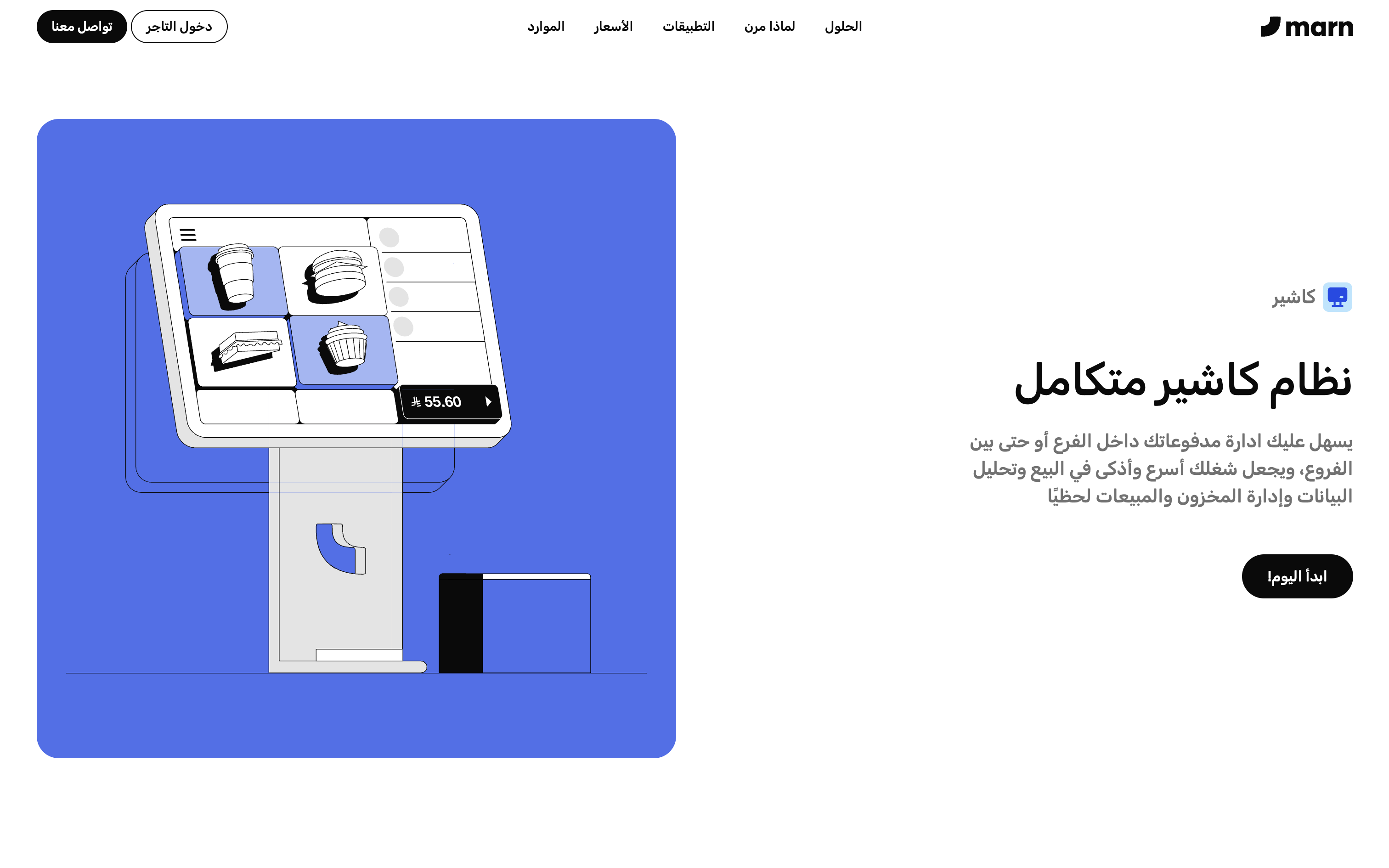
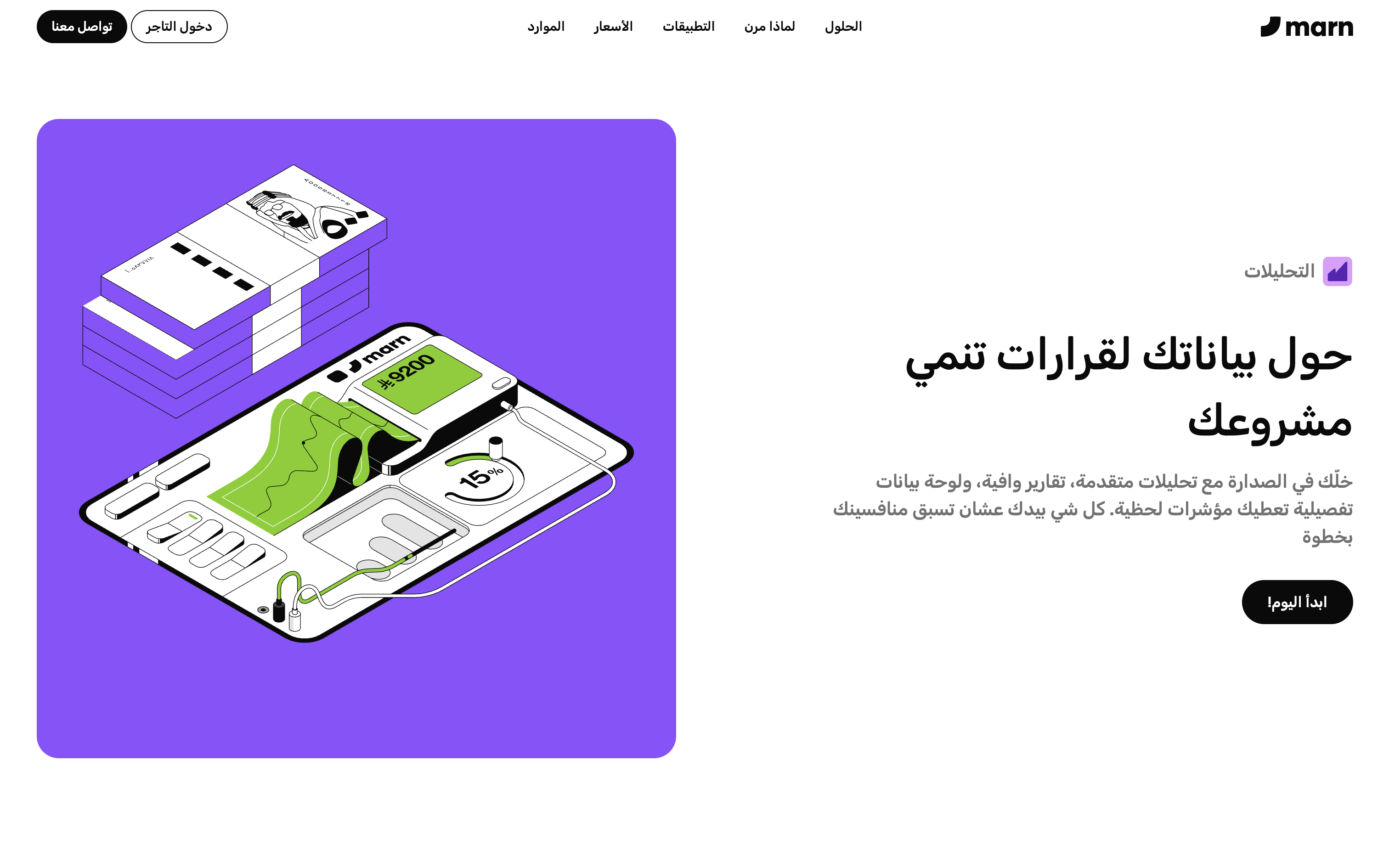
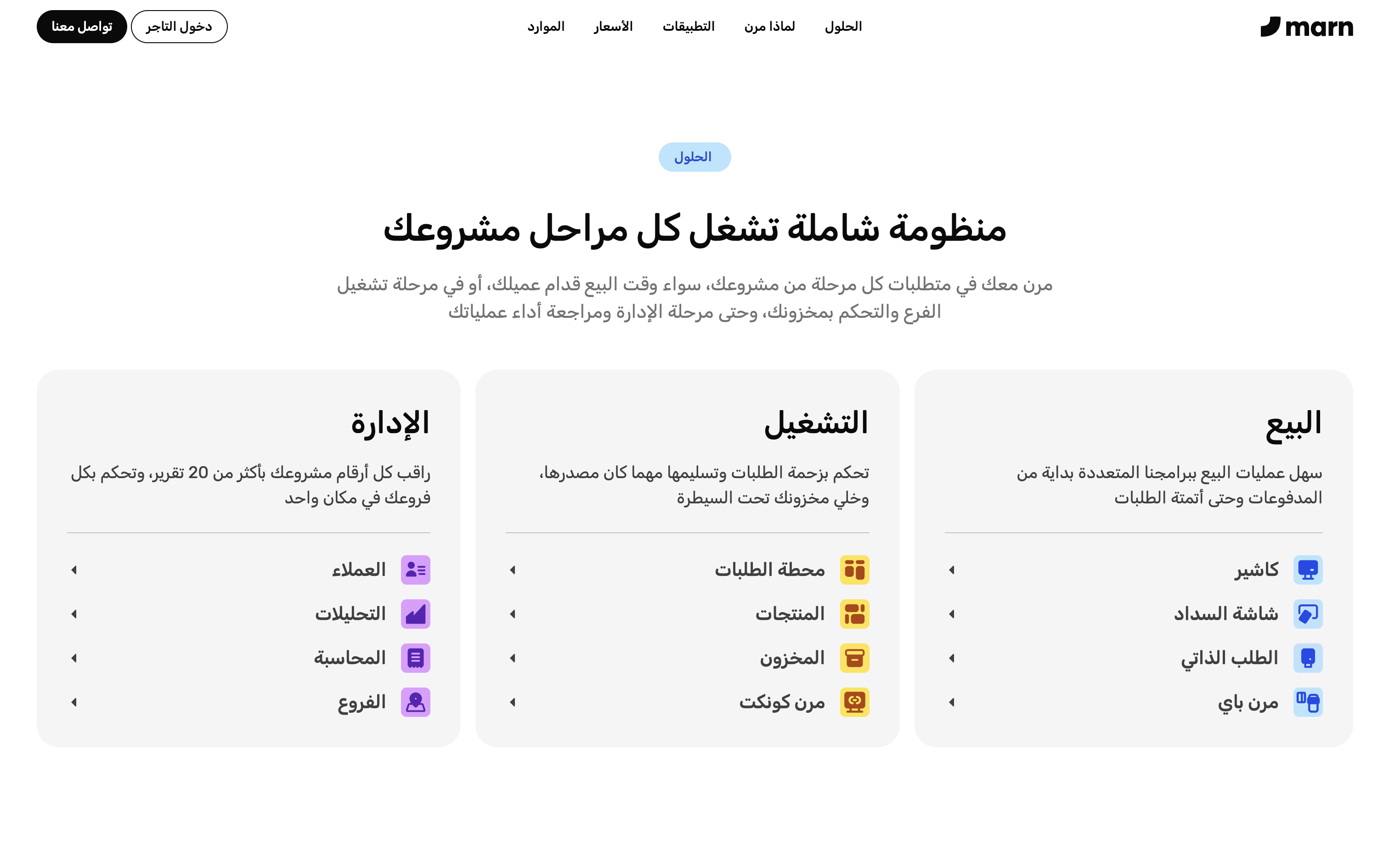
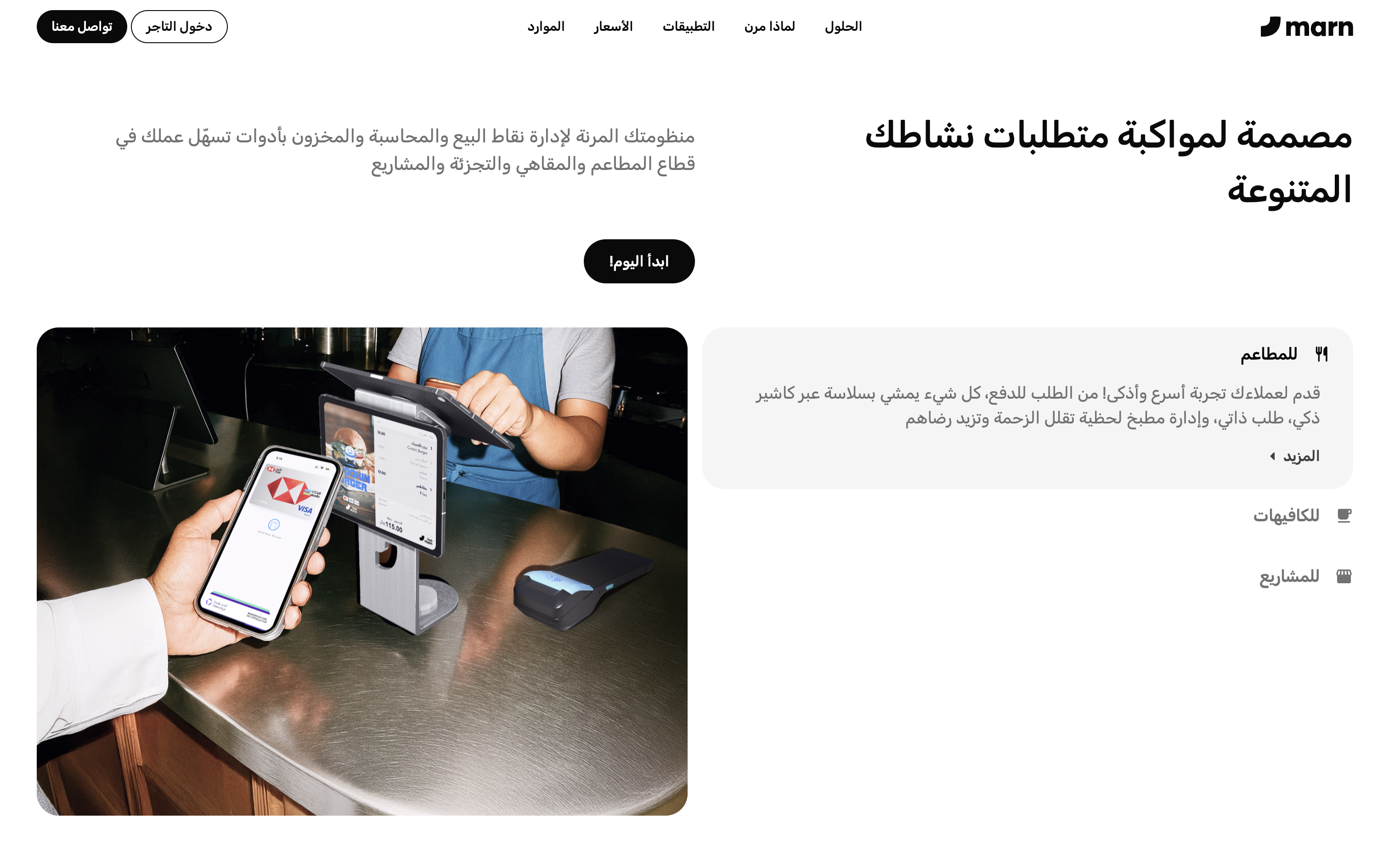
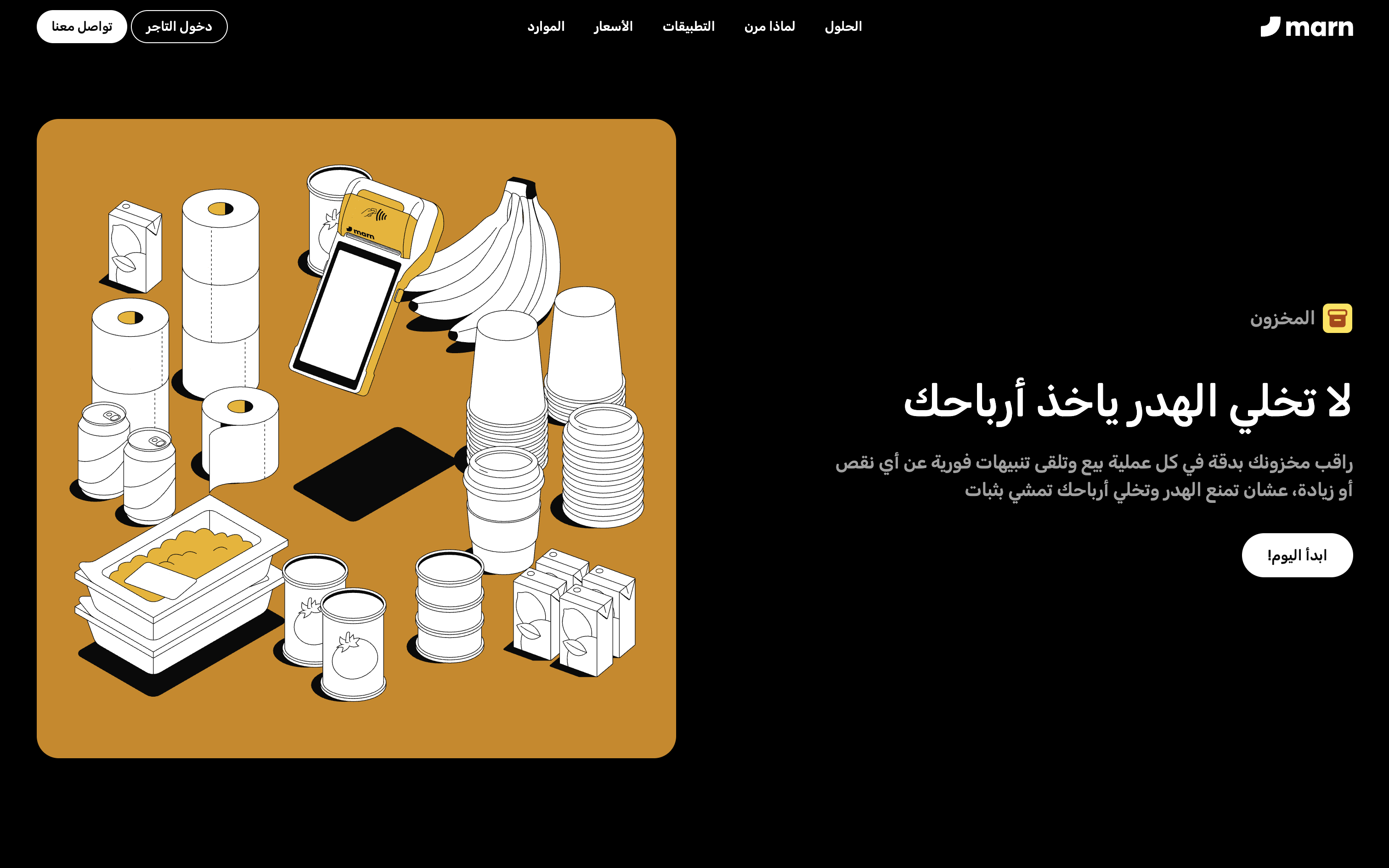
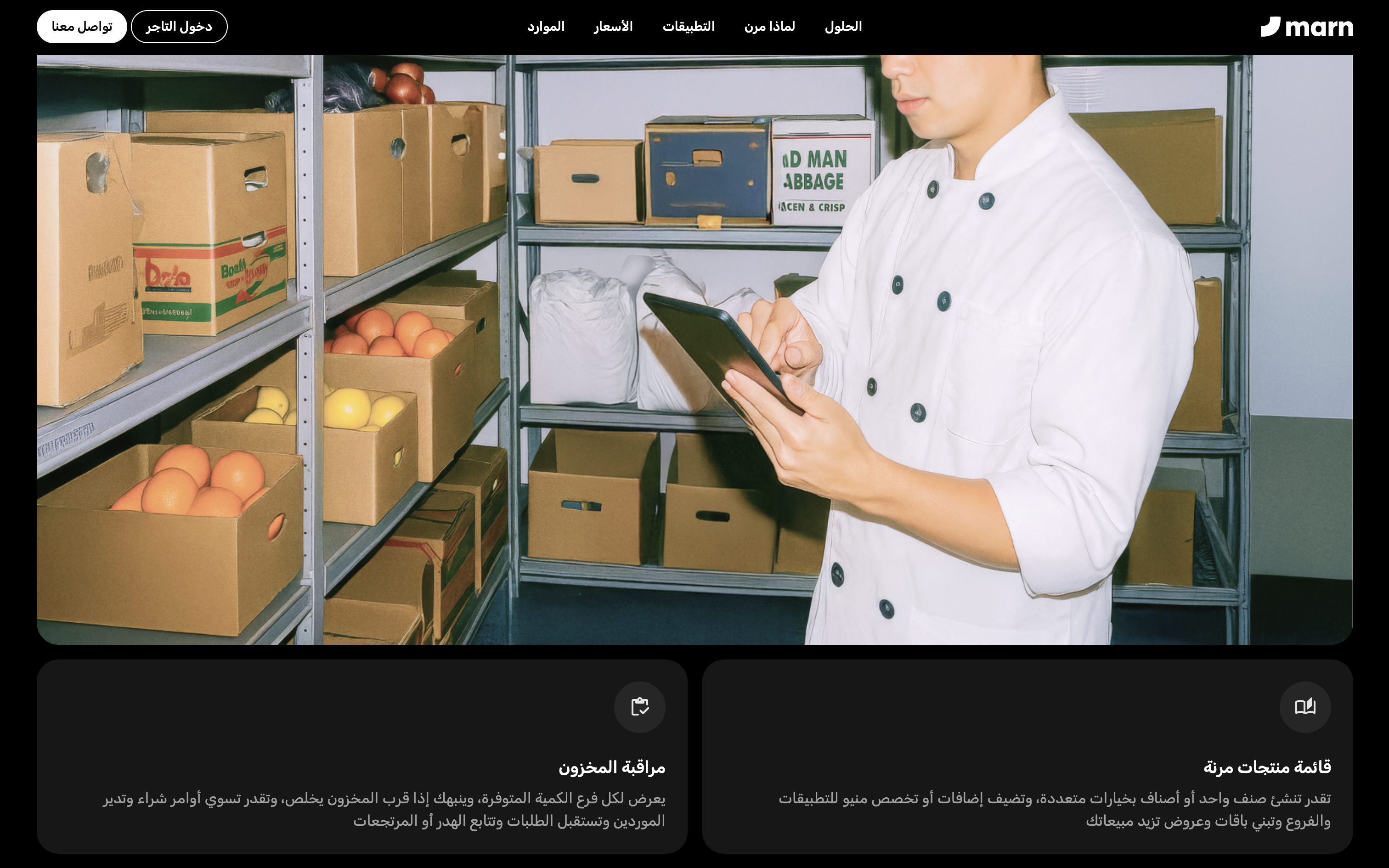
I mapped the site into a small set of repeatable page and section patterns, then implemented those patterns as composable Payload blocks. Ten solution pages now share one underlying structure while retaining their own content, accent colour, and product imagery.
The site is Arabic-first and supports a complete RTL-to-LTR layout change. An AI-assisted translation workflow drafts the English mirror for editorial review, reducing duplicated publishing work without removing human oversight.
The system
Next.js renders the public site, while Payload manages pages, solutions, integrations, marketplace entries, posts, and forms. Shared schemas connect those records so an integration or customer logo can appear across the site without being copied into individual pages.
Custom form work connects Payload with HubSpot while preserving the site’s design system and RTL behaviour. The deployment runs on Cloudflare Workers, with media stored in R2.
Technology
- Next.js 15 (App Router)
- Server components for the marketing pages, with Payload's content fetched at the edge per locale.
- TypeScript
- Types generated from the Payload schema flow straight through to the block renderers.
- Payload CMS 3
- The whole site is a block-based layout builder — pages, solutions, integrations, posts, and the marketplace are all editable documents.
- PostgreSQL
- Payload's database, holding the bilingual content tree and the collection relationships between solutions, integrations, and categories.
- Cloudflare (OpenNext + R2)
- Deployed to Cloudflare Workers via OpenNext, with media stored in R2 and served through Payload's media endpoint.
- next-intl
- Arabic-first routing with a full English mirror. Layout flips to RTL for /ar and LTR for /en.
- AI SDK (Google Gemini)
- A Payload translator plugin drafts the English mirror from the Arabic source so editors review rather than retype.
- HubSpot (custom Payload plugin)
- A plugin I built on top of the form-builder that pulls form definitions from HubSpot and renders them in the site's design system instead of as an embed; submissions create HubSpot contacts and are persisted back to Payload.
- Tailwind CSS v4
- Design tokens for the brand palette and the per-module accent colors used across the solution pages.
- Motion
- Restrained reveals on section entry and the integrations logo grid.
Features
- Bilingual Arabic/English with full RTL support and locale-aware routing
- Arabic-first content with an AI-drafted English mirror editors review in Payload
- Block-based layout builder — every page composed from a shared set of ~20 blocks
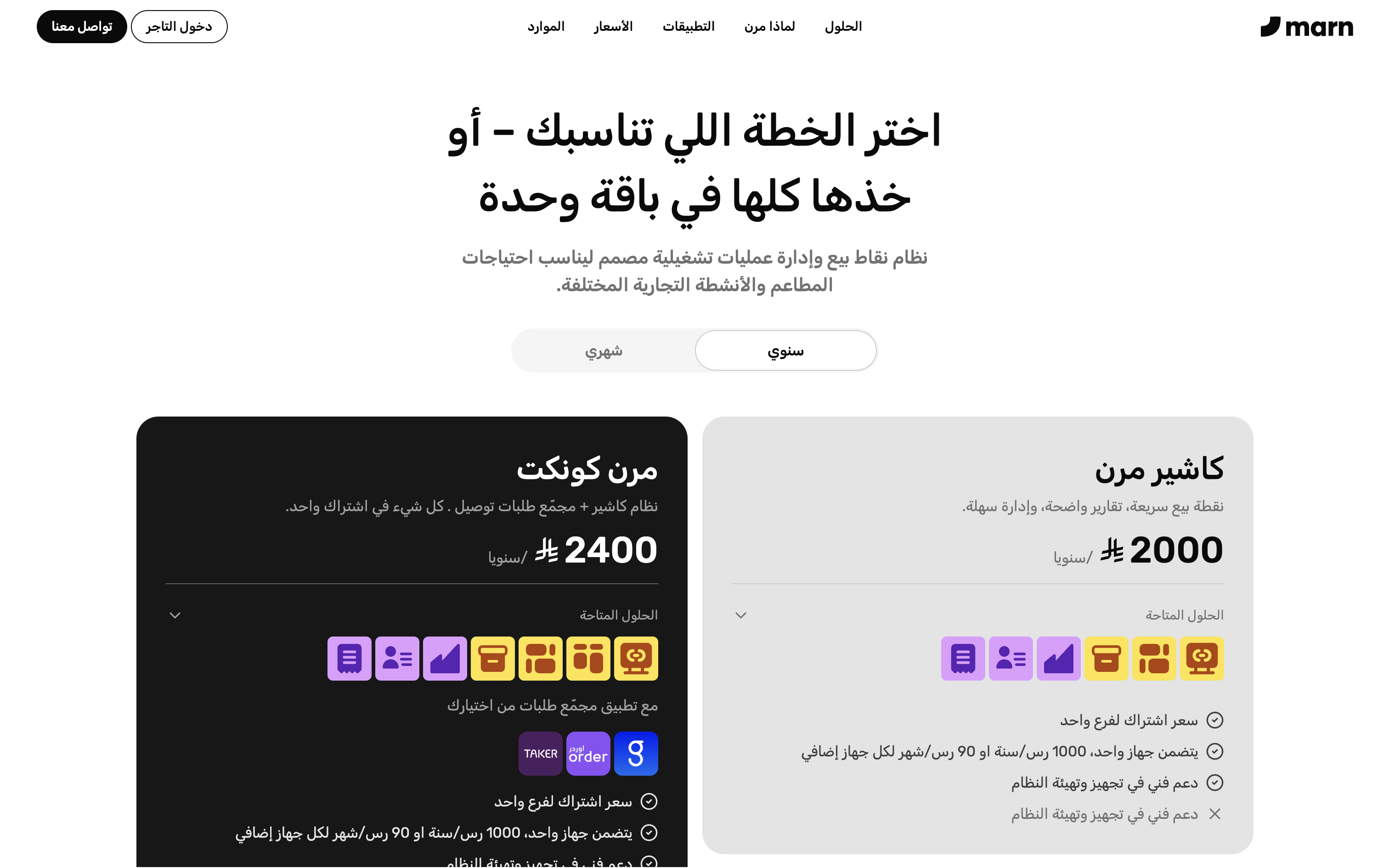
- 10 solution pages (Cashier, PaySync, Kiosk, Order Station, Products, Inventory, Analytics, Branches, Customers, Accounting) on one template
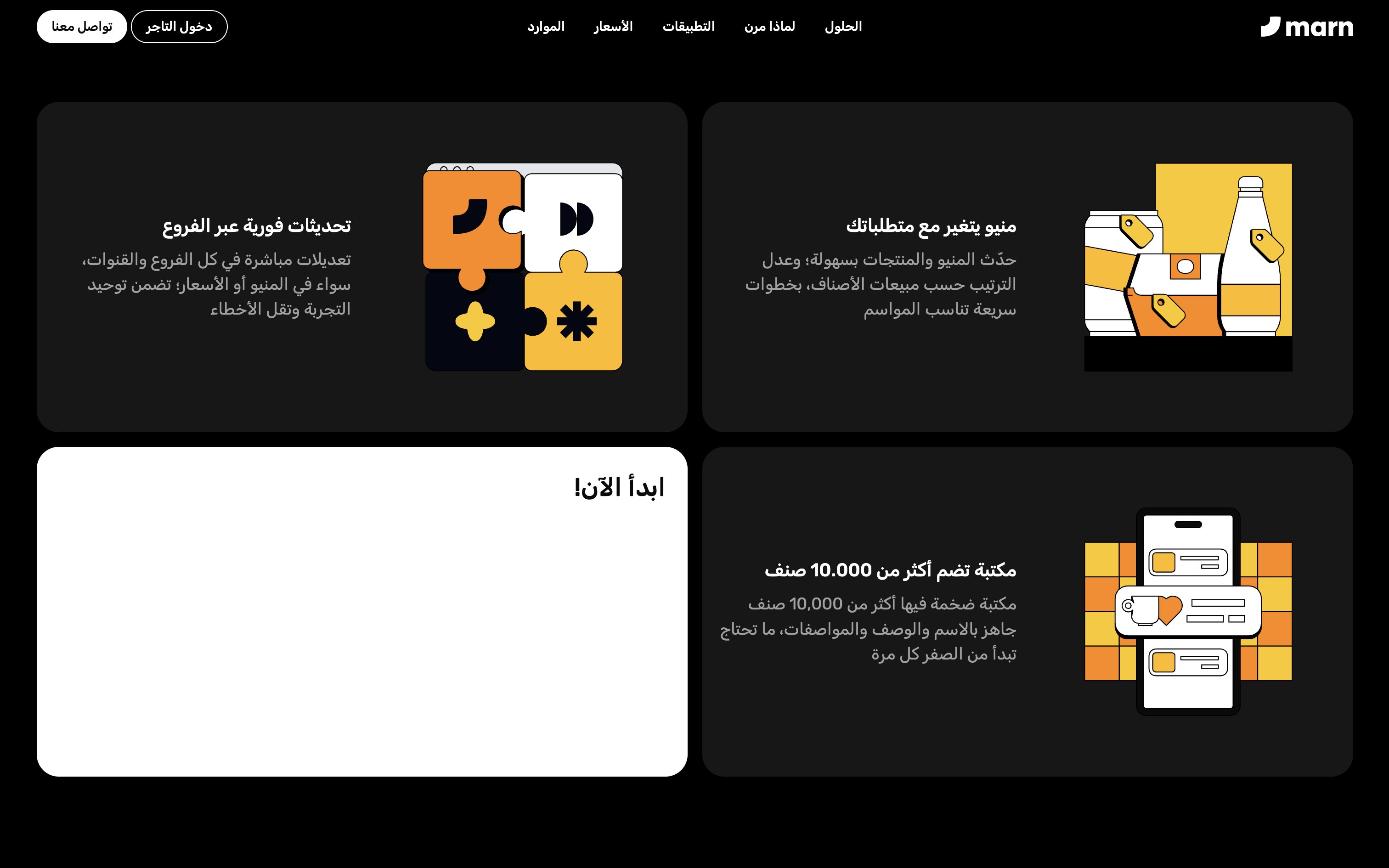
- Per-module accent colors carried through hero illustrations and section cards
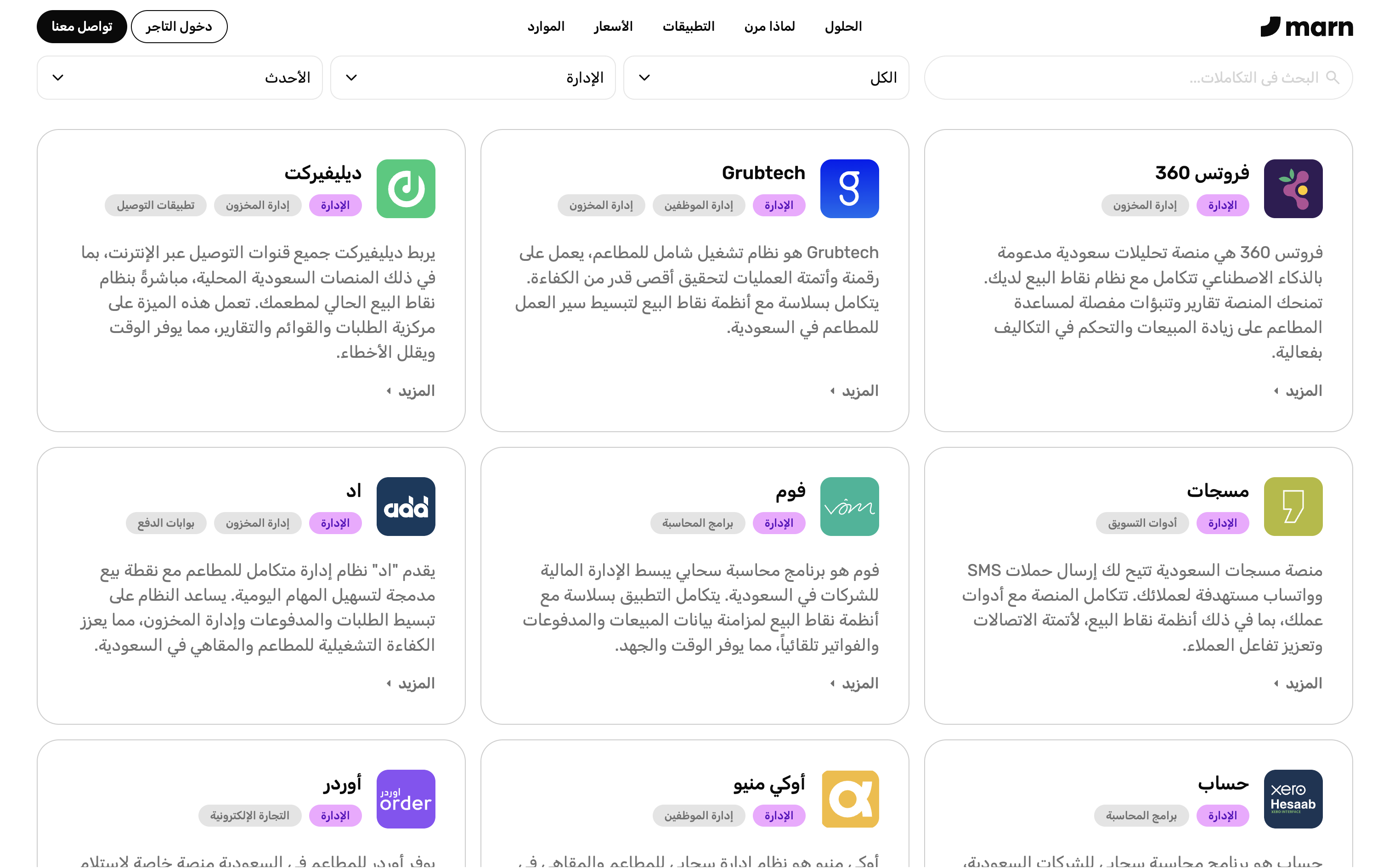
- Marketplace with search and category/ecosystem/sort filtering
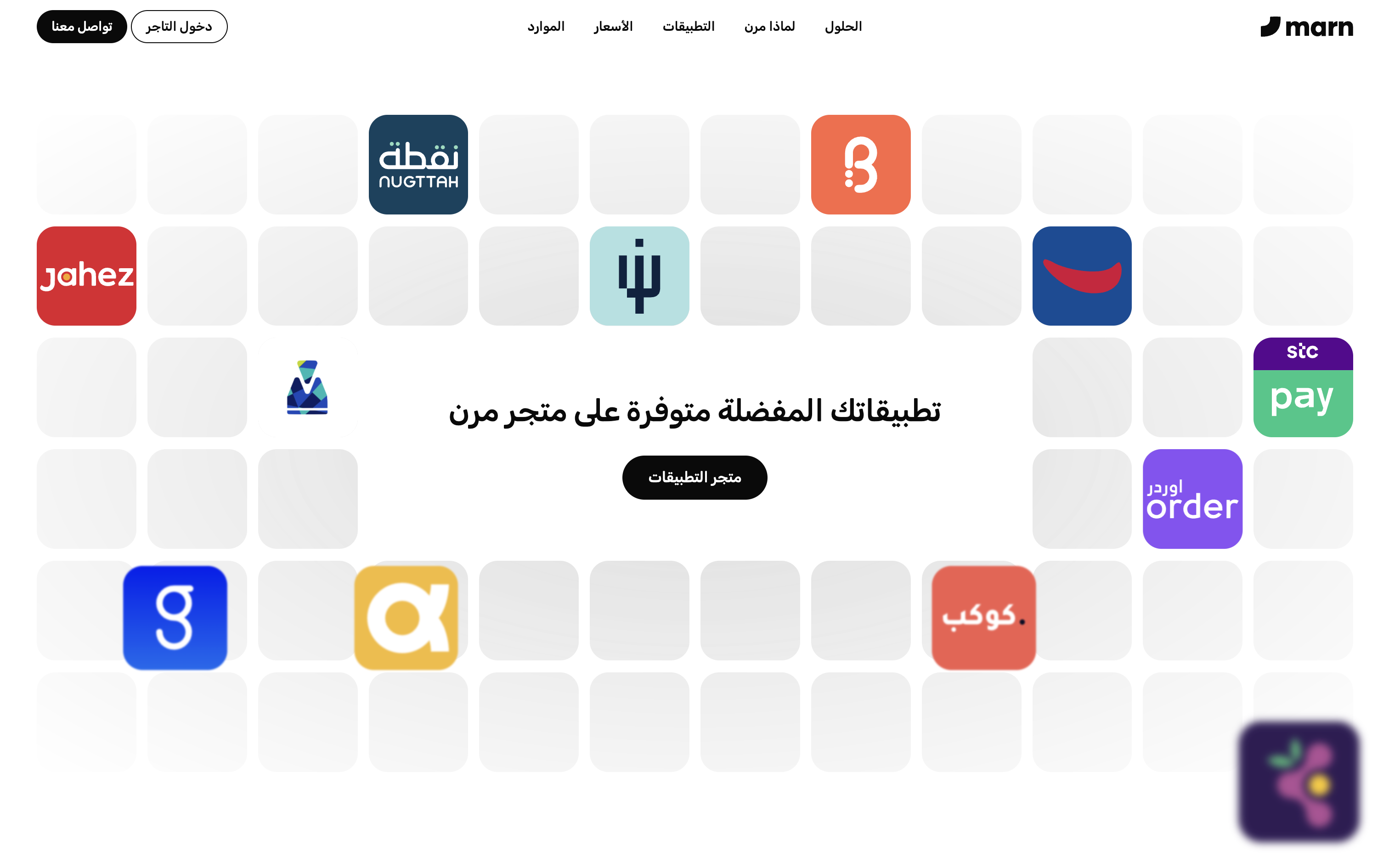
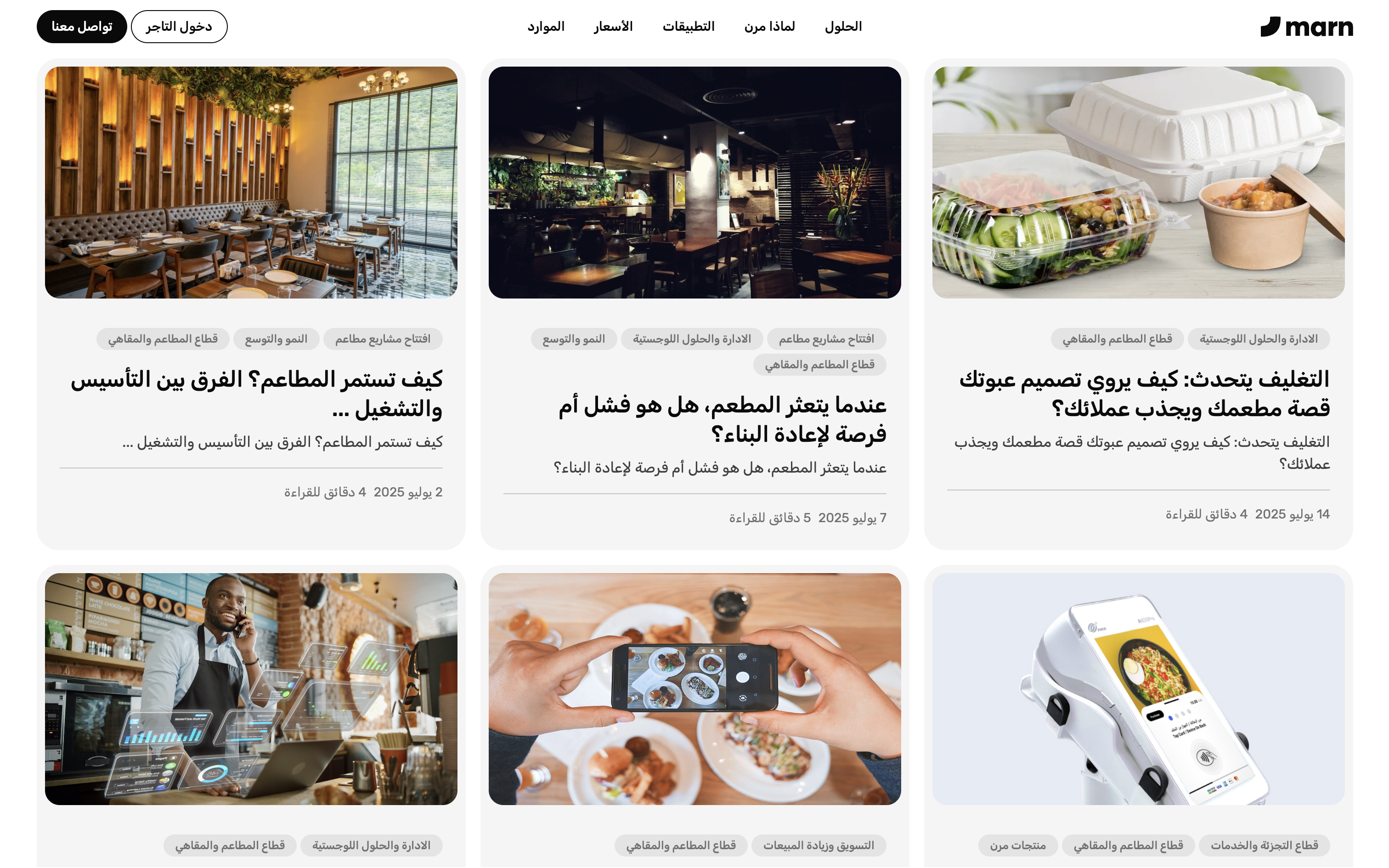
- Integrations, testimonials, customers, and logos managed as Payload collections
- Form builder powering the contact and lead-capture forms
- Custom Payload plugin extending the form-builder to pull HubSpot form definitions and render them in the site’s design system
- Form submissions sync to HubSpot as contacts while persisting to Payload
- In-progress form entries auto-saved so visitors resume where they left off
- Draft preview and live preview for content editors
- SEO, redirects, nested-docs, and search plugins wired into the CMS
- Migrated off WordPress + WPML onto a single content model
The result
The shipped site replaces WordPress and WPML with a single bilingual publishing model. Marketing can assemble pages and manage product records without code changes, while the design and engineering systems remain aligned through the same block vocabulary.